
Terrace glazing helps protect the internal space of a structure from external factors and significantly enhances its functionality and comfort of use. This solution is suitable for private homes, cottages, and commercial properties such as restaurants, cafes, hotels, and country complexes. But how can it be done correctly? The manufacturer's recommendations, which you will find in the article, are based on knowledge of materials, and real experience of installation and operation.
Why is glazing a terrace needed
A glazed terrace becomes a place for relaxation, a guest reception area, or additional commercial space. The decision to glaze an extension is made when one of the following tasks needs to be addressed:
- Protection against weather phenomena – wind, rain, dust and snow. Glazing forms a physical barrier to climatic phenomena. This option is often used in regions with variable weather, strong winds and precipitation. Glazing significantly increases the comfort of being on the terrace.
- The season of use is extended. Without glazing, the extension is actively used for 2-4 warm months a year. After the installation of glazed structures, the service life is extended to 6-9 months.
- Improved thermal and sound insulation. Glazed systems retain heat, reduce heat loss, protect against drafts, and minimise "street noise." Glazing a terrace in a private house located near a road, or in cafes and restaurants in urban environments, helps to create comfortable conditions for relaxation.
- Enhancing aesthetics and achieving architectural completeness. Glass systems visually lighten the facade and make the extension a part of the building's overall architectural concept.
- Increasing usable floor space. A glazed terrace can be transformed into an additional room, which can be used as a relaxation area, a winter garden, or a summer lounge for guests.
A further advantage is the growth in the market value of the property. Properties with well-designed glass structures sell faster and are valued higher.
Types of terrace glazing
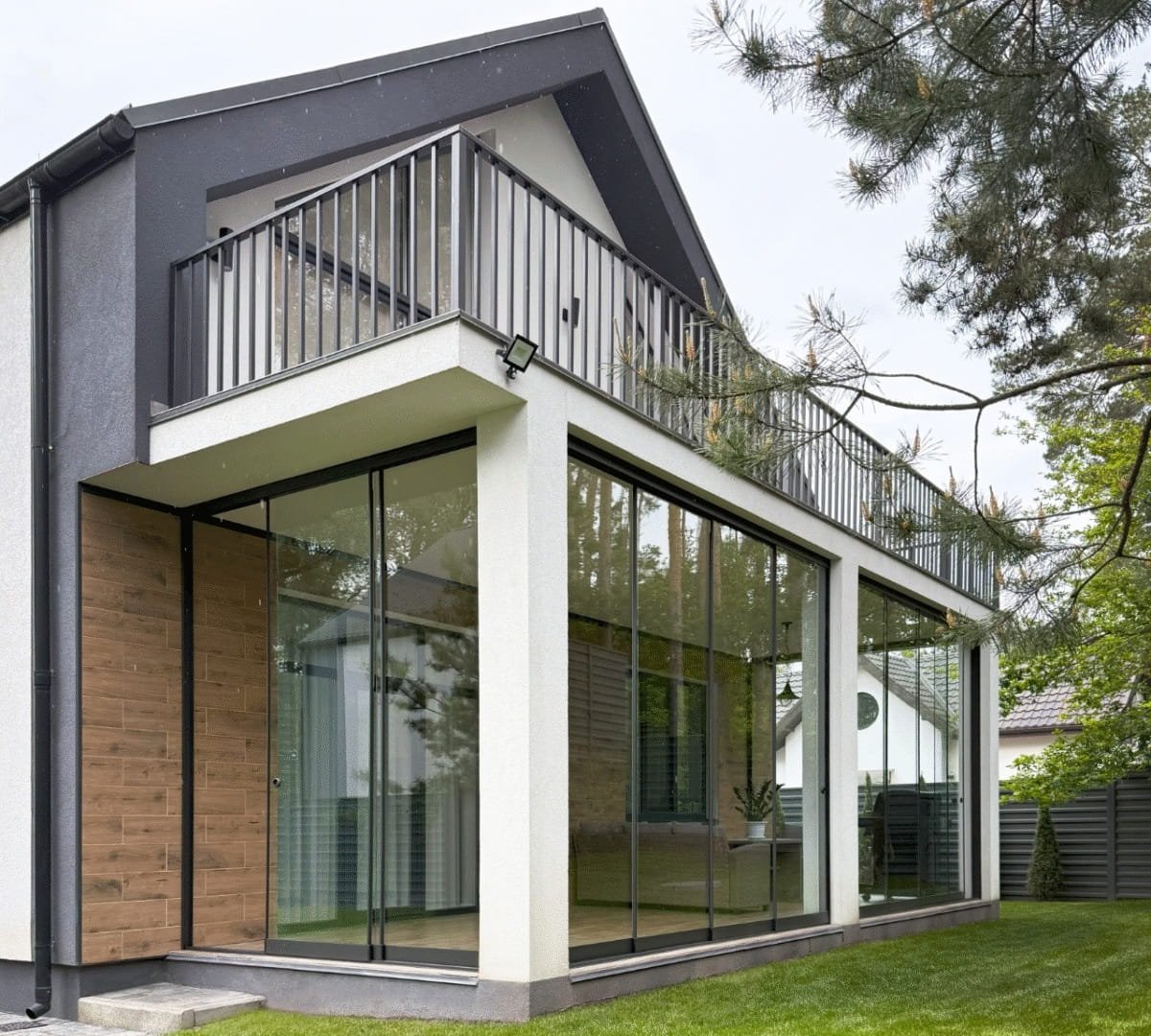
The choice of glass enclosure type depends on the objectives, budget, and insulation requirements. Cold glazing for a terrace is a lightweight system with a reduced level of thermal insulation. Its main purpose is protection from precipitation, wind, and external dirt. Lightweight aluminium profiles and single or tempered glass are used for installation. This reduces the load on the base and maintains a visually light appearance. Features and materials:
- Aluminium profiles without thermal break
- Toughened or strengthened glass.
- sliding, folding or frameless systems.
This is the perfect solution for summer terraces and unheated verandas, with limited foundation load-bearing capacity, for cafes and restaurants with seasonal operation. Pros of cold glazing:
- Affordable price
- quick cut
- low weight
- high corrosion resistance
- good appearance
- Minimal intervention in the building's structure.
The accommodation is not suitable for winter use without additional heating.
Warm glazing of a terrace is a full-fledged enclosing structure designed to retain heat. After installation, the room is suitable for year-round use. The extension becomes part of a residential or commercial space. Energy-efficient double-glazed windows and profiles with a thermal break are used for installation. Differences between warm and cold glazing:
- double-glazed windows
- thermally broken profiles – aluminium or PVC;
- high joint airtightness;
- The possibility of integrating heating and ventilation.
After installing warm glazing in the extension, a comfortable temperature is maintained in winter and the transitional seasons, with protection against frost and condensation provided. Pros of the solution:
- energy efficiency
- increasing the usable area.
A drawback of the decision is the increase in expenditure for the project's implementation.
Glazing of terraces: popular systems from the manufacturer
A modern glass fencing structure is a set of engineering solutions designed for specific operating conditions. When designing a system for a particular object, external appearance, wind loads, opening geometry, frequency of opening, safety, and ease of maintenance are considered. Popular types include frameless, panoramic, folding, and sliding systems.
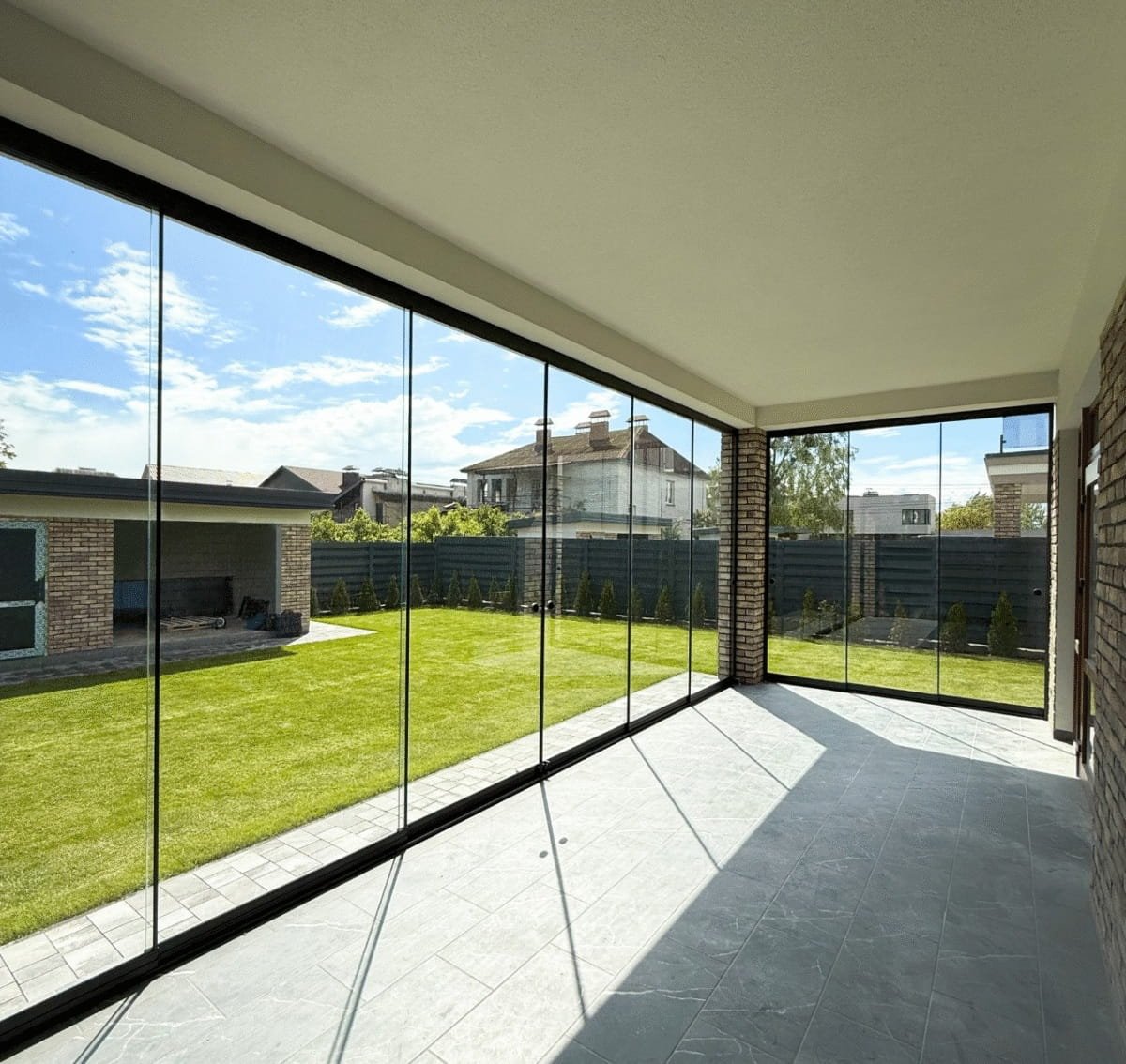
Frameless
A maximally open space with no visual obstructions. Glass panels are fixed in upper and lower guide profiles without vertical posts, allowing for a panoramic effect. Toughened, high-strength glass is used for installation. Frameless terrace glazing is ideal for rooms with beautiful views of gardens, water bodies, or natural landscapes. It is the best choice for cafes and restaurants with summer-use lounges.
Sliding
The optimal solution for rooms with limited space, where windows and doors are frequently opened and closed. The universal system is suitable for commercial properties, country houses, and properties outside the city. The sashes move along guides parallel to each other, not occupying usable space. You can order sliding glazing for terraces from Splenko. Among the advantages are space-saving due to parallel opening, ease of use even in narrow rooms, and the possibility of installing large glass panes.
Panoramic
Focused on maximum access to the natural world and visual expansion of space. In such projects, the emphasis is on precise calculation of profiles, glass thickness, and mounting points. Due to the large glazing area, errors are unacceptable and affect operational safety and durability. A terrace with panoramic glazing is an object with floor-to-ceiling glass walls, creating a visual effect of merging with the surrounding space. During the day, additional light sources are not needed in such a room. This is an ideal format for spacious verandas and country houses with beautiful surrounding landscapes.
Folding (accordion)
This allows the opening to be fully revealed as the glass panels fold to one side. It is one of the most functional solutions, requiring high precision in manufacturing and professional installation. Advantages include a complete opening with no dead zones, high load-bearing capacity when installed correctly, a premium appearance, and flexibility of use. This option is suitable for combining a terrace with a house or a restaurant hall, quickly changing the space's format, commercial properties with high traffic, and projects with non-standard opening geometries.
Terrace glazing selection: manufacturer's recommendations
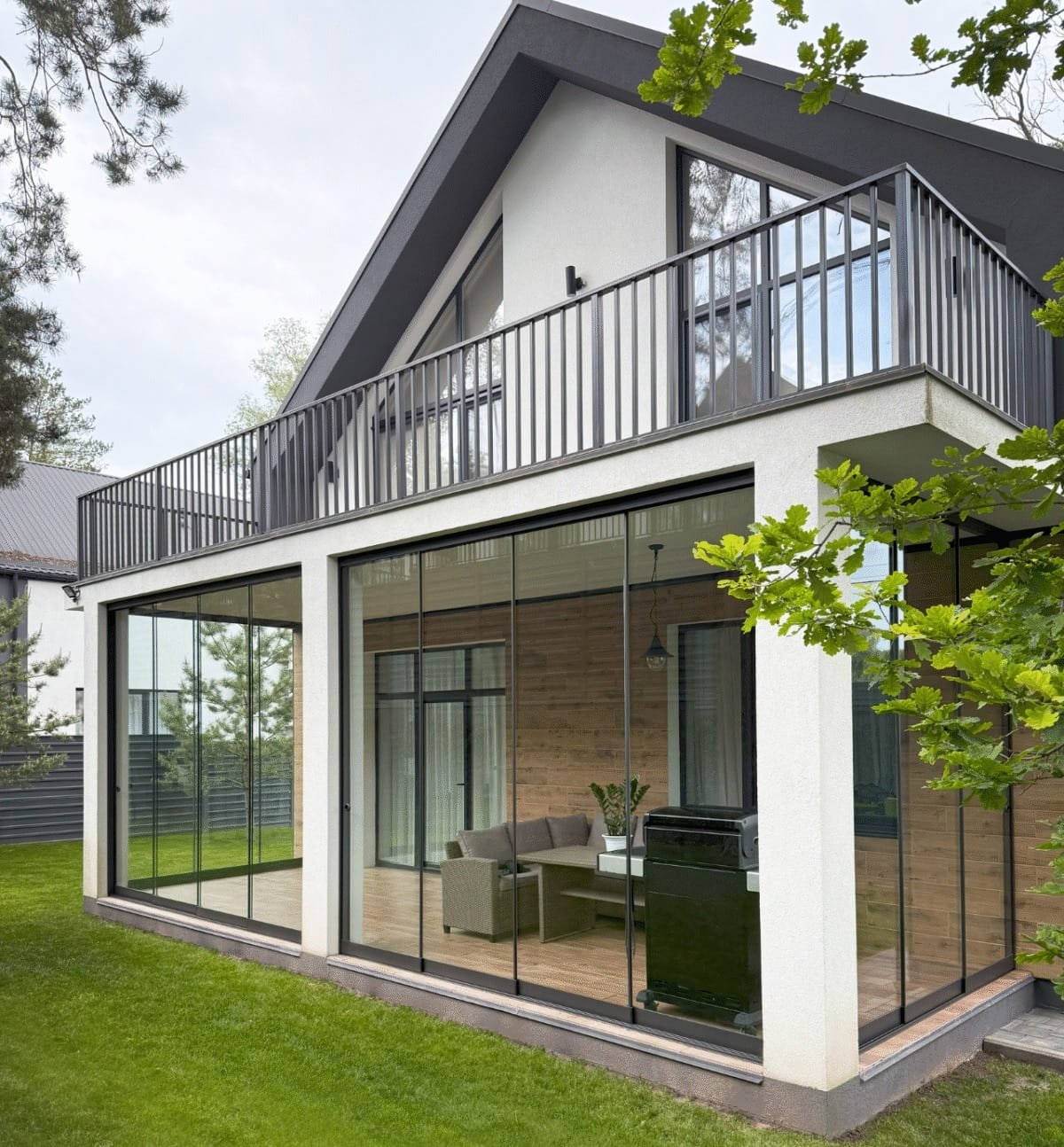
Mistakes in selection lead to rapid wear, reduced comfort, and additional costs. To correctly choose the type of glazing, you need to consider the following factors:
- Windloads, rainfall, temperature fluctuations, and the terrace's orientation to all aspects of the compass affect the choice of profile and glass.
- For a relaxation area, lightweight and visually open solutions are suitable, while for a kitchen or commercial space, systems with enhanced sealing, sound insulation, and wear resistance are recommended.
- Materials. Aluminium profiles – for cold glazing and complex architectural forms, PVC and warm aluminium – for rooms for year-round use. The thickness and type of glass are selected taking into account safety and loads.
Types of glass
Modern manufacturers offer a wide range of glass, which differ in characteristics:
- Toughened glass. Undergoes heat treatment, which increases its strength by 4-5 times.
- Triplex. Laminated glass, bonded with a polymer film. Even when damaged, it doesn't shatter, remaining in the opening.
- Energy-saving glass. A special coating reflects thermal radiation back into the room. As a result, heat loss in winter and overheating in summer are reduced.
- Tinted and solar control glass. Reduces direct sunlight penetration and lowers room temperature. Increases privacy and protects furnishings from fading.
The type of glass determines its appearance, strength, level of thermal insulation, safety, and resistance to climatic loads.
Common errors
Even high-quality materials do not guarantee reliable operation with incorrect design or installation. Common mistakes:
- Saving on hardware. Poor quality hardware quickly fails, leading to sash misalignment, difficult opening, and loss of airtightness.
- Incorrect measurements. Consequences include the formation of gaps, installation problems, and the need for rework.
- Lack of ventilation. Without properly organised moisture removal and air circulation, condensation will appear on the glass, humidity will increase, and the risk of corrosion of metal elements will grow.
Ordering glazing from Splenko means savings and a guarantee of the technical compatibility of all elements. We perform an individual engineering calculation for the project and select optimal materials. You can order all types of glazing systems from us with a guarantee of prompt production and quality installation. Take advantage of a free consultation to learn more and get an approximate project cost calculation.