
Tempered glass is a popular modern material used in interior design for household appliances, cars, office partitions, showers, furniture, and smartphones. Products made from it look laconic, retain transparency like ordinary glass, but are superior in terms of their traditional counterparts.
What is tempered glass
Tempered glass is a sheet material that has undergone special treatment and thermal hardening. The processing creates a special structure of internal stresses, which makes the glass much stronger and safer to use.
The key feature of the tempered version is its increased strength. Unlike ordinary glass, which breaks into sharp, dangerous fragments even under minor mechanical impact, tempered glass is much harder to break, which is especially important in everyday use and to protect against injury.
How tempered glass is made
The production process is strictly regulated and allows for rework after quenching. Technical holes, cut-outs, and rib grinding are performed prior to heat treatment. Main stages:
- Sheet preparation. The initial glass is cut to size, edges are processed, holes and technological cutouts are made. After tempering, it is impossible to change the shape - the glass will break.
- Heating to a high temperature. The sheet is placed in a quenching furnace and heated to a temperature of around 620-680°C. This is close to the softening point of the material.
- Abrupt cooling is called quenching. The heated glass is rapidly blown by streams of cold air. The surface layers cool and set faster than the inner layers.
- Formation of internal stresses. During tempering, a complex stress system is created inside the glass. The surface is in a state of compression, while the inner layer is in a state of tension.
This combination gives the material increased strength without increasing weight or density.
Properties of tempered glass
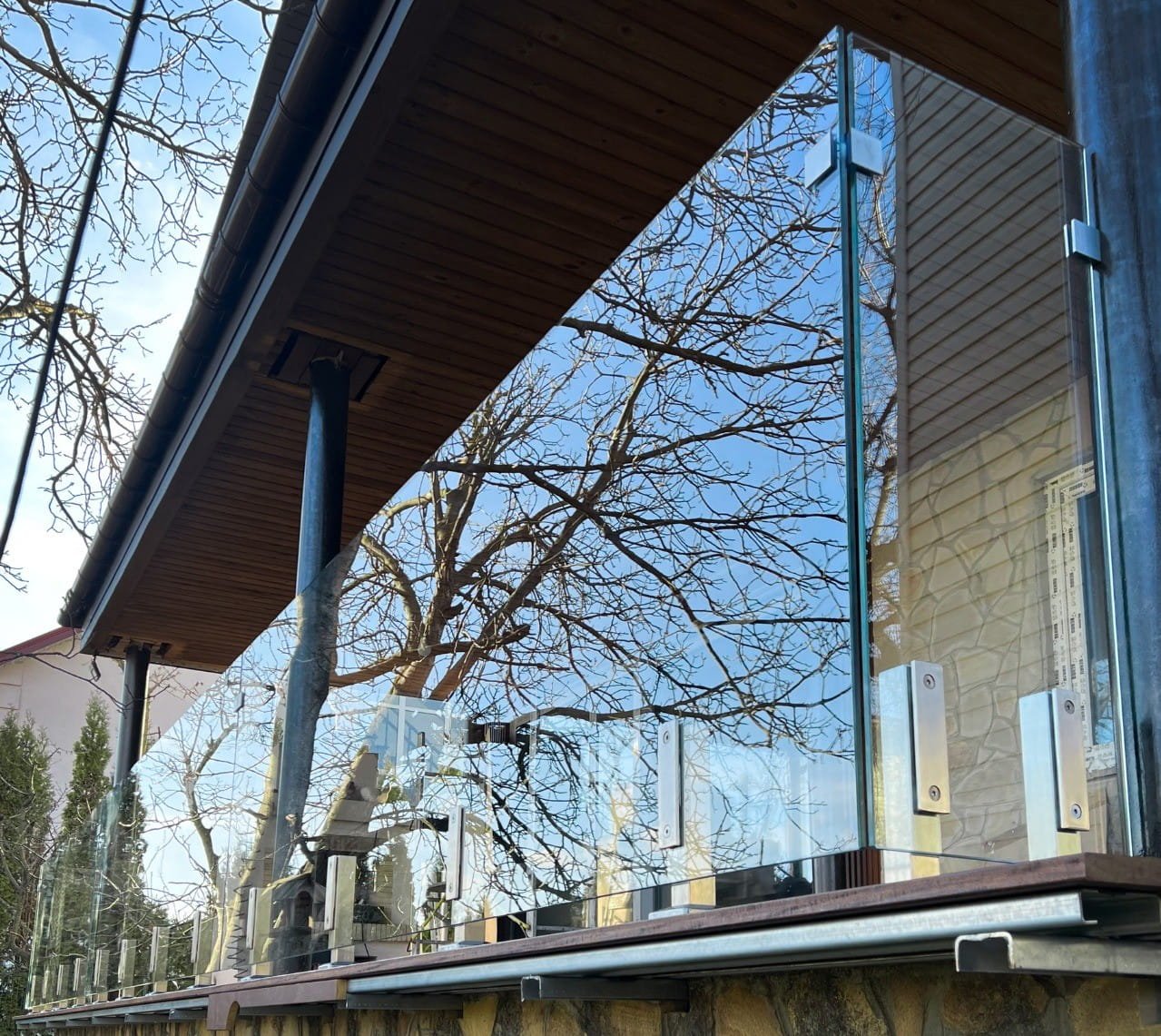
Tempering radically changes the performance characteristics of tempered glass. The key properties make the material popular in various industries.
The strength of tempered glass
One of its main advantages is its strength, which is 4-7 times higher than that of conventional glass of the same thickness. What this means in practice:
- better withstands impacts and point loads;
- less sensitive to accidental mechanical impact;
- is suitable for the manufacture of structures without frames or with minimal fixation.
Tempered glass for the bathroom or office is difficult to break by accident. It will easily withstand the load that becomes critical for a conventional version - slamming a door, dropping an object, or putting pressure on a large area.
Heat resistance
Tempered glass products can withstand sudden temperature changes of up to 200-250°C without breaking. Ordinary glass can crack from hot water or localised heating. Tempered glass retains its integrity.
Wear resistance and durability
The material is highly resistant to stress in everyday use:
- less scratches in everyday use;
- is not afraid of direct contact with moisture, hot steam, and chemicals;
- retains its appearance for years without clouding;
- does not deform over time.
If properly installed and maintained, the service life is estimated at decades. Glass structures retain their transparency, do not turn yellow and do not require complex maintenance
How to distinguish tempered glass from ordinary glass
It can be difficult to determine the type of material by eye. Experts use several reliable methods to distinguish between tempered and non-tempered glass:
- Inspect the edge. The edge of a hardened version is perfectly flat and carefully polished without microscopic chips or sharp edges. With a conventional material, the edge is more likely to appear untreated or with minimal traces of processing.
- Look for the manufacturer's markings. This will help you determine whether the glass is tempered or not with maximum accuracy. The tempered version often has a laser engraving or stamp, the designation Tempered, Toughened, ESG. The markings are often subtle and often located in the corner of the sheet.
- Look at the sheet in polarised light. If you look at the tempered sheet through polarising glasses or a smartphone screen from a certain angle, you can see the characteristic iridescent stains or dark stripes - traces of internal stresses. Ordinary glass does not have this effect.
- Pay attention to optical distortion. The tempered version is characterised by a slight waviness of the image and subtle optical distortion at an angle. This is a normal consequence of tempering and is one of the indirect signs.
When determining the type, consider the context of the application. The main difference between tempered and ordinary glass is its increased strength. If the material is used in a shower enclosure, glass door, partition without a frame, car or household appliances, it is most likely tempered. The installation of ordinary glass in such places is prohibited by safety standards.
Tempered glass: application
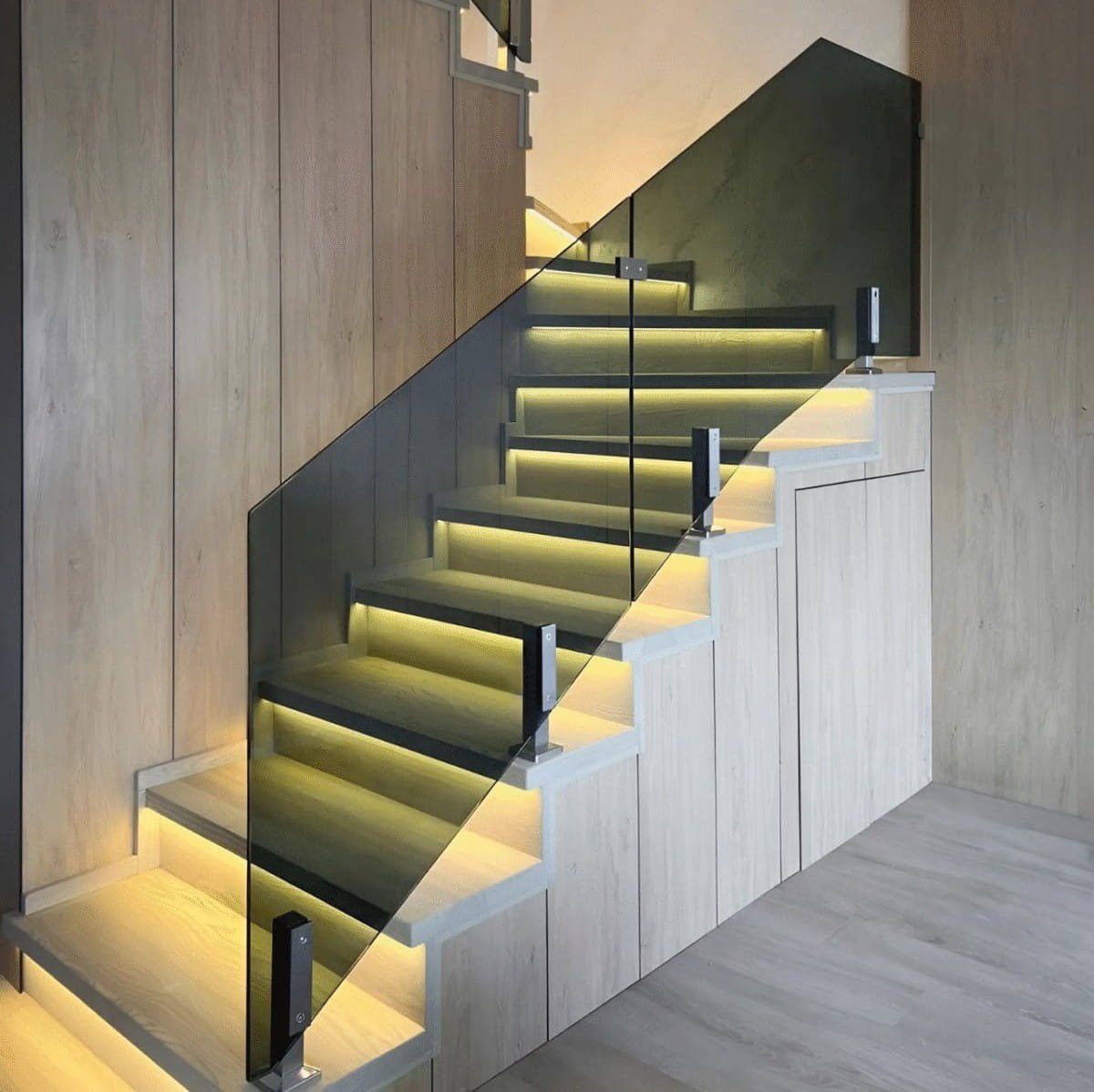
The range of applications is extremely wide. This is the case when tempered glass works just as seamlessly in the interior as it does in commercial architecture and street furniture. The reason is simple: it combines strength, safety, aesthetics and durability.
Home interiors
In living rooms and spaces, tempered versions are valued for their safety and visual lightness. What is made of tempered glass:
- Doors. The material is ideal for the manufacture of interior doors. It easily withstands constant loads, is not afraid of slamming, and does not pose a danger to users in case of breakage. Tempered glass doors visually expand the space, transmit light, and are suitable for modern and classic interiors.
- Handrails and fences. Guardrails are installed on stairs, balconies, and mezzanines. Tempered glass for railings can withstand considerable pressure, does not deform and meets safety requirements. Additional advantages include the fact that it does not "weigh down" the interior and does not block the view.
- Worktops and shelves. Tempered glass is resistant to scratches, moisture and temperature changes. Shelves and worktops made of it are not afraid of hot dishes, water and household chemicals, and remain visually neat and light for a long time.
- Partitions. Allows you to zone the space without feeling enclosed. Durable glass sheets make such structures reliable, stable and completely safe for everyday use.
Tempered glass for shower enclosures is the most common area of application. The material is resistant to temperature extremes, constant humidity and mechanical stress, which is a critical property for a bathroom.
Office and public buildings
In commercial environments, tempered glass is chosen for its strength, durability and safety compliance. What is made of the material:
- Office partitions. Tempered glass fences and partitions allow you to create transparent or translucent work areas, provide access to light and visual openness. The material can withstand intensive use and accidental impacts, which is especially important in places with a large flow of people.
- Trade showcases. Shop window glazing should be as durable and safe as possible. Tempered glass for shop windows is resistant to external influences and reduces the risk of injury to customers and staff in the event of damage.
- Design of restaurants, shopping malls and business centres. Several factors are important here: aesthetics, safety, and durability. Tempered glass can be easily integrated into design concepts, is not afraid of active use and meets the building requirements for public spaces.
The impact-resistant material combines aesthetics and engineering logic. It allows you to create bright, open spaces without compromising on safety, withstands active use and remains relevant regardless of trends.
Small architectural forms and facade structures
 The advantages of tempered glass have led to its use in exterior structures where the material is subjected to increased mechanical stress, weather and other adverse factors.
Popular designs:
- Awnings and visors. The material can withstand the effects of snow and wind, is not afraid of temperature changes and direct sunlight. Tempered glass awnings and canopies look visually light and modern, and do not weigh down the facade.
- Fencing of balconies and terraces. Glass sheets provide safety and an open view. They are not subject to corrosion, do not require complex maintenance and retain their beautiful appearance for many years.
- Entrance groups. Entrance areas are constantly exposed to mechanical stress and accidental impacts due to the large flow of people. The material ensures reliability, stability and aesthetic appearance of the structure, which is especially important for commercial facilities.
Partitions and fences, canopies, stairs and handrails made of tempered glass look modern and visually expand the space.
Tempered glass structures
Glass is an independent structural element or part of complex engineering solutions.
Popular products:
- Shower cabins. They are made of 6-10 mm thick sheet. Tempered glass showers are safe, resistant to moisture and easy to clean.
- Glass partitions. They are used in residential and commercial spaces. The material allows you to create large-format panels without frames. The thickness of tempered glass varies from 8-12 mm.
- Door. They are installed in residential interiors and public buildings. Due to the increased strength and lightness of glass sheets, designers are abandoning massive frames.
- Fencing. Staircase, balcony and terrace railings require high strength - the material fully meets these requirements.
- Awnings and canopies. Multilayer sheets are the best option for increasing the load-bearing capacity.
- Stairs and handrails. Tempered glass for stairs withstands dynamic loads and ensures a high level of safety.
- Floor made of tempered glass. It is made of multilayer sheets that are designed to withstand heavy weight loads. The solution is popular in modern interiors and commercial spaces.
Individual customised designs are an opportunity to adapt the material's advantages to your own needs and non-standard projects, from designer partitions to complex facade elements.
Tempered glass from Splenko: advantages
Tempered glass manufacturers offer a full range of products, allowing you to choose the characteristics and fittings you need. Other advantages of buying directly from us:
- precise adherence to dimensions and tolerances;
- the ability to choose the thickness, type of edge treatment, texture - matte, patterned, tinted, transparent;
- quality control at all stages of production;
- compliance with construction and safety standards;
- no overpayments to intermediaries;
- the ability to manufacture non-standard products for an individual project.
Splenko specialists take into account future loads and operating conditions, which is critical for the safety and durability of the structure. Order glass products from Splenko to pay less for quality products and choose the best material parameters for your application.